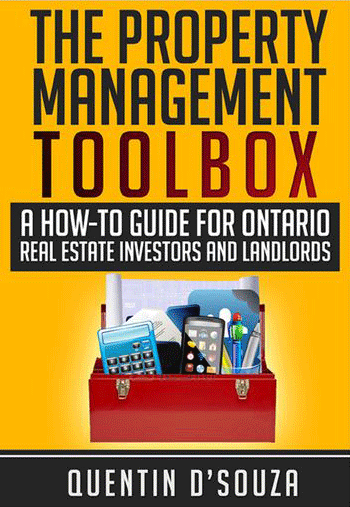
 The original purpose of this book sounds a little bit more morbid then I think most book origins do. It was created to act as a manual for my spouse in the event of my death.
GET ON THE WAITING LIST FOR THIS BOOK – PUBLISHED MID-2014
It started when I was speaking with a potential joint venture partner about all the possibilities and potential pitfalls associated with a joint venture deal. My partner asked me, “What would happen to the property if you were to die?” That may sound like a morbid question, but in a joint venture real estate deal it’s a legitimate (and prudent) question. This got me thinking more about the eventuality of my own death and the possible impact it would have on the business.
I’d been developing systems for several years already, but at that point I hadn’t started putting all the information together into a manual.
The next impetus to build out this manual came from my wife as I was preparing for a business trip approximately one year after the joint venture partner asked me the question about death.
Laura (my wife) and I were preparing for my departure and we soon realized that much of the preparation was centered on our real estate business. There was much knowledge to be transferred from me to her just so I could take a short trip!
It became obvious that I knew much about our day-to-day operation that Laura didn’t know since I handle much of the day-to-day affairs of our real estate business. Laura was somewhat concerned as I left on that short trip and actually said to me, “What would I do if you passed away? I think I would have to sell all the properties.”
Based on what we’d been building for several years, I knew selling wouldn’t be the best option for her if I were to pass away, so I wanted to offer her a way to handle much of the business if I had an untimely death.
At that time, I began systematically compiling information for this manual using best practices I’ve learned on my own as well as the wealth of knowledge I’ve learned from other real estate investors, and from personal contacts in the real estate investment industry.
Soon after starting my serious effort towards the manual, I soon realized it was a valuable tool for more than just my demise. For example, it became apparent that when the day comes where I want a property manager to take over day-to-day operations, this manual would also be invaluable.
With my wife and a future property manager in mind, the manual has been designed as a system that can be scaled up. What I’ve found over the years is that with the right systems in place it’s less time consuming to manage several properties than it is to purchase and renovate one property.
We typically renovate every property we buy, and I’ve found that the process of finding, renovating and putting the first tenant in a property is more work than managing the rest of the portfolio.
This is somewhat counter to most landlords’ experience. As you spend time in real estate investing clubs and speak with other investors, you find that day-to-day management is usually the biggest headache landlords have. Knowing how streamlined I’ve made it; I started to think that my land-lording knowledge might be unique. This belief was soon borne out by evidence.
When I began to show other landlords the manual I’d created, they were eager to get a copy of it. I was even offered $1,000 at a coffee shop for my original operations manual binder. That was when I knew I had something special. I’ve shared many of the principles as well as the idea behind the manual with hundreds of investors over the years, and experience has proven that this manual makes a great tool for both the average and experienced landlord in Ontario.
Enjoy!
Quentin
Make sure to get on the waiting list for this book. Which will be published in just a few months.